
Author: Ulises Silva
Having coached starting at the age of 19 comes with a lot of benefits but also with much to be desired. I am 24 with nearly 6 years of High School Coaching experience. I have been a part of a state championship-winning team and have been trusted enough by an athlete to help coach him to a 3A state championship in the 100m Dash and a record-setting, state-winning performance in the 200m Dash.
I am on both sides of a spectrum. Although I feel like I have enough knowledge to be a good coach, I am also at a point in my career where I feel that I have no knowledge. There are days where I compare myself to the Chris Korfist, Tony Holler, and my mentors; then there are days where I see myself as just a novice that has learned nothing. Both can be true at the same time.
As I write this, I speak to the young coaches of this world, both young in coaching acumen and young in age, as I believe myself to be both.
Do: Believe in Your Knowledge
I have watched countless coaching videos and read more articles than I have scholastic books at this point in my life. I have listened to countless hours of training podcasts from the world’s best coaches. Although none of that would matter if I did not believe in my ability to coach and program.
To the athletes I coach, I am the best coach they could get. That is because I believe in myself. I believe in what I have been taught; I believe in my ability to communicate with athletes. To put it shortly, belief will take you further than knowledge at some points in your life. The buy-in of your athletes will ultimately take you further than unconfident coaching.
Confidence and humility are not opposites. The best coaches I have been around carry both at the same time.
Don’t: Put Yourself on a Pedestal
Do not believe yourself to be the end-all, be-all. I have allowed other coaches to coach my athletes, especially in the off-season. My best track athletes have trained year-round. They are not trained by me year-round, in part due to IHSA guidelines.
I have, however, sent them to my mentor Brandon Stryganek to train in the off-season. I find this important because it allows the athletes to get different coaching styles throughout the year.
We do not own athletes; we simply gain their trust.
Do: Seek Out Mentors
The single most important thing in my coaching career has been meeting my two mentors, Brandon Stryganek and Jake Cohen. Both bring widely different training and coaching styles to the table, and both have been invaluable to my growth as a coach.
One created the basis of my knowledge. The other refined it and challenged it.
That distinction matters more than it might seem. A mentor who builds your foundation gives you something to stand on. A mentor who challenges your ideas forces you to understand why you stand there. You need both. Seek out people who don’t coach the way you do, who don’t think the way you do; that discomfort is where the real learning happens.
Don’t: Let Track Feel Like a Job
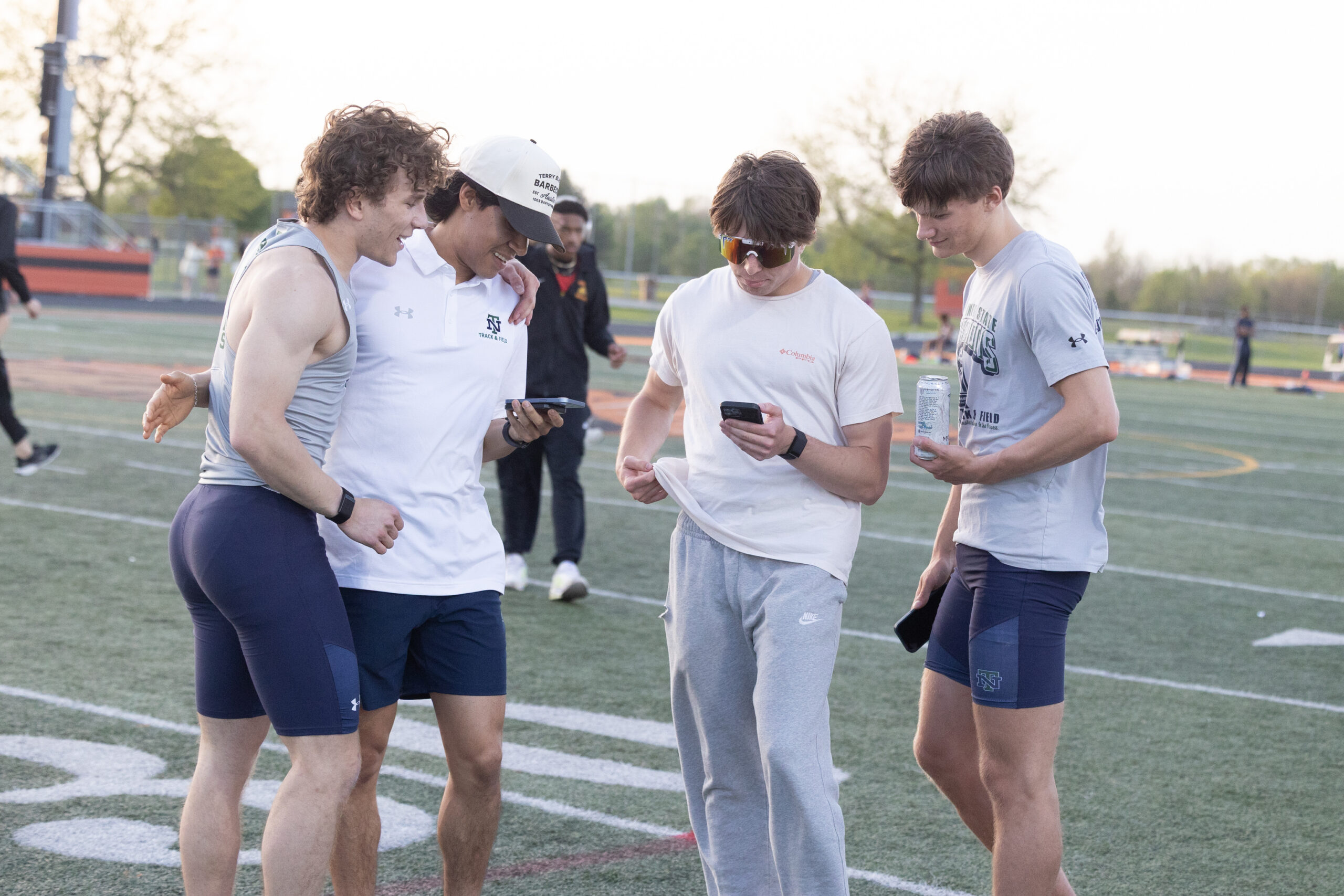
What I love most about coaching track — aside from the technical side of the sport — has to be the kids that make showing up worth it. I work with an amazing group of athletes who never fail to amaze me. They have an undying amount of trust in me and my methodology. They have trusted me with their athletic careers; it is my job to make sure they are having fun and adequately prepared. My kids know I love them and that I am confident in them, which allows me to act as an older brother to them that wants nothing more than to see them succeed as men and as athletes.
To me, coaching is not just a way to earn a stipend or receive extra money. The stipend was never the point. It never will be. It’s a lifestyle, my form of ministry, and a way to give back to the world. I advise all coaches to learn from others, question your methodology, and find the answer to those questions. Reach out to people, and give thanks to those who taught you. I love coaching, and God has blessed me with an amazing ability.
Ulises Silva is currently a sprints and hurdles coach at New Trier, specializing in short sprints and hurdles. At New Trier, Silva has helped develop multiple athletes under 22 seconds in the 200m while contributing to one of Illinois’ top sprint programs. He has also played a key role in the sprint development of William Landwer, the IHSA all conditions record holder in the 100m dash and IHSA state record holder in the 200m dash.
In addition to coaching, Silva works in sports performance and athlete development through TNT Ignite, combining sprint training, strength and conditioning, and data-driven programming to improve athletic performance. His coaching philosophy emphasizes athlete education, long term development, and acceleration based sprint training.